-----------------------

This blogspot is a medium to share my thoughts and adventures apart from promoting my books. Below are the books which have been written or authored and published by myself.


"Berpetualang ke Aceh: Mencari Diri dan Erti".

ISBN 983-42031-0-1, Jun 2006


"Berpetualang ke Aceh: Membela Syiar yang Asal"

ISBN 983-42031-1-x, May 2007


"Berpetualang ke Aceh: Sirih Pulang ke Gagang?"

ISBN 978-983-42031-2-2, November 2007


It is interesting to note that while these books were written in Malay it has gained enough attention to merit being part of the collections of the American Library of Congress and National Library of Australia. Look here and here.


While the first three books were published by my own company, the fourth titled "Rumah Azan" was published in April 2009 by a company called Karnadya with the help of the Malaysian national literary body Dewan Bahasa dan Pustaka. It features beautiful pictures along with stories behind selected mosques which could be related to the history of Islam and the Malays alongside the formation of the Malaysian nation. Look at the article A collaboration of old collegemates - the book "Rumah Azan".


My fifth book "Ahlul Bait (Family) of Rasulullah SAW and Malay Sultanates", an English translation and adaptation of the Malay book "Ahlul Bait (Keluarga) Rasulullah SAW dan Kesultanan Melayu" authored by Hj Muzaffar Mohamad and Tun Suzana Othman was published early 2010. Look here... My 5th book is out! Ahlul Bait (Family) of Rasulullah SAW and the Malay Sultanates... . For more information check out my Malay blogspot CATATAN SI MERAH SILU.


Like my fourth book "Rumah Azan", the sixth book "Kereta Api Menuju Destinasi" is also a coffee-table book which is published by the company Karnadya with the cooperation of Dewan Bahasa dan Pustaka (the main Malay literary body in Malaysia). Coming out January 2011 it features pictures and stories on the adventure travelling by train to all of Peninsular Malaysia along with the interesting places which could be reached this way.


My seventh book "Jejak keluarga Yakin : Satu sketsa sejarah" in turn is a coffee-table book which is written, editted, designed and has pictures taken by me. Coming out of the factory October 2011, this book which combines family history with history of places such as Singapura, Johor, Batu Pahat, Muar and in fact the history of the island of Java and England has been reviewed with me interviewed live in the program Selamat Pagi Malaysia at RTM1. Look at the article Siaran langsung ulasan buku "Jejak keluarga Yakin : Satu sketsa sejarah" dan temu ramah di Selamat Pagi Malaysia. Some selected contents have been featured in Sneak peek "Jejak keluarga Yakin : Satu sketsa sejarah".


-----------------------


The "Berpetualang ke Aceh" series of novels could be obtained in e-book form. Enter http://www.e-sentral.com/, click general novel and go to page 4. You can also type the word "Aceh" at the search box. Or click straight Book 1, Book 2 and Book 3.


Monday, March 12, 2007

Pictures in Muar 3

Peace be upon you dear readers. Here, I want to place some more pictures of Muar for all to see. Actually this is done so that my dear friend the editor of the Malay tabloid Kencana can just enter this blogspot and choose whicever pictures he deems fit for the latest segment of "Laksamana pulang ke Perak" (Admiral returns to Perak) in the publication... Sort of doing work on-line eh? Anyway do have a look. Most of the pictures are taken in and around Bukit Treh, some 5km from Muar town centre... For a reason though...


Picture of Muar town taken from the food court area near the bus station at Bentayan.

This is Bukit Treh which is quite famous among the Muar town's folks, the one and only hill within 5km radius from the town centre. It is not that high, perhaps not even 100 feet tall. Watch closely, behind all the bushes and greenery is the shape of an overturned ship. Perhaps it's true what the locals say, the legend of Si Tanggang (or another character with similar storyline?) where a son who betrayed his parents was cursed to stone along with the contents of his ship did happen here?


The water treatment facility at the foot of Bukit Treh.


Ruins of an old wall at the foot of Bukit Treh.


A closer view of the ruin.


The pipe connecting the old water treatment facility (from the time of the British colonialisation, pre Malaysian-independence of 1957) at the top of Bukit Treh to the nearby area.


The current Bukit Treh water treatment facility and the old wall ruins seen from the hillside.


The steps up Bukit Treh which began halfway on top.


The old British era water treatment centre on top of Bukit Treh.


The water treatment building seen from a different angle.


The tower of the old water treatment facility.


An old tomb at the foot of Bukit Treh. Not many people, not even the locals knew of the existence of the old tomb which is said to belong to a princess of olden days. The tale goes, the princess is the third wife of the character called Si Tanggang who betrayed his parents. The kind-hearted princess advised her husband to accept his parents regardless of how ugly or unkempt they looked or their poor origins (read the story. Si Tanggang was born in a jungle to poor parents. He left them to see the world and became rich and famous. That's why he is ashamed to acknowledge his roots). Too bad, the princess also had to suffer the curse inflictied on Si Tanggang for his refusal to acknowledge the two poor-looking folk who came to his ship as his real parents.


The mosque of Kampung Bukit Treh. In the background, near the bushes seen behind the mosque tower lies the old tomb said to belong to a royal princess.


The mosque of Bukit Treh seen from a different angle.


The mosque of Kampung Temiang which is situated some 1km from the mosque of Kampung Bukit Treh. The two villages lie side by side but Bukit Treh itself is situated within the perimeters of Kampung Temiang.
Kampung Temiang is my mother's village. It was also known as Kampung Tok Raja (Tok - a respectable call for an elder, Raja - a royalty) to commemorate a noble who opened up the vilage a century or two ago. The name of the village's main road is still known as Jalan (the road of) Tok Raja or Jalan Tok Raja Temiang.


Muar river seen from somewhere near Bukit Treh.
Below are pictures of the old Portugeuse forts, one in Muar, another in Melaka for exhibit and points to ponder. The illustration of the one in Melaka, known also as the A Famosa was made in 1630 while the one in Muar is said to be made in 1604, God knows best...


Friday, March 09, 2007

Writing to let go off steam

Note: This spontaneous piece was written at around 10pm last night, when I was piggy-riding on the neighbour's Wi-Fi signal. However by the time I'm done with the piece, the signal was already out. Now, I'm somewhere near KLCC hopping on someone's else signal, so there...

It has been a while since I felt like writing anything in English, or for that matter even in Malay. I'm supposed to complete the editing process for my second book in Malay, "Berpetualang ke Aceh: Membela syiar yang asal" (literally translated: "The journey to Aceh: Advocating the true faith) or BKA II... After all, there's only the last or closing chapter left, just 12 more pages to go before the editting process for the 300-page book is completed, then it's just a matter of final reeditting and layout using InDesign before turning the whole document into PDF format ready for printing. But yet I found myself rather lethagic the last 2 weeks, unable to even string a few words into a proper satisfying sentence.
To top it all, I'm also supposed to submit a brief 2-page summary of the first book "Berpetualang ke Aceh: Mencari diri dan erti" ("The journey to Aceh: In search of self and meaning) or BKA I to a tv programme producer but even that I haven't finished. And I haven't even started writing for the latest installment of the "Laksamana pulang ke Perak" ("Admiral returns to Perak") for the Malay-language Kencana tabloid paper of which I have become a regular contributer since late last year.
Tonight, after returning from a massage session (decided to have one to unblock my system), I opened up the Internet to enter my favourite forum, Forum CVT only to find an internal server error blocking the page. In the morning, a friend had called saying she had been trying to enter the forum several times and found the same error. Apparently, the forum is going through some updating process and some friends guessed it has something to do with the fact that the forum and some forumers were featured prominently in the latest issue of Kencana which came into market the last few days.
I bought one yesterday and had a good laugh. The March 1-15 issue which happens to be the 113rd edition is the first to feature stories from the forum following a discussion held among prominent members. It happens that Kencana's editor is among them so he had dedicated 5 pages of pictures plus our tomfoolery in the last few pages of the tabloid... The main focus, the gathering we held in Manjung, Perak on Jan 27 attended by some 20 plus forumers, also the trip to Pangkor made by four - me (MerahSilu) and the forumers with nick-names AbnormalSuam, DiamondArcher and Master C-Fu.
Why, there's even a complete article on our friend PenditaGila who is getting married soon. Imagine the laugh I had upon seeing that just below that article was another about advices given by another friend who uses the nickname Kuali - on the do's and don'ts of having sex, the title, "Pesanan Kuali kepada bakal pengantin" (Kuali's advice to the future groom). Among the advice, don't have sex under a tree which is bearing fruits... Or you might end up with a baby who will grow up to be a fierce beater or something like that, haha!
Admittedly, it is serious advice based on old wisdom but still I can't hold myself from laughing like a jackal... Must be the context of the situation. Come to think of it, there's another article about forumer KurmaJalis who got lost on the trip from Ipoh to Manjung. It should have taken only an hour or so but this dreamer actually took 7 and half hours to do the job! And just below that article was a picture of one forumer posing in meditation with his head covered by a towel. It was taken for fun but the serious twist given in Kencana was just too hilarious... I mean, yes the pose was a serious one normally done by advanced meditators but the accompanying article which seemed to imply this particular forumer is a member of secret sect sounded rather spooky and zany.
Anyway, I'm just writing all this to let go off steam.... At least I'm writing something in English especially in this blogspot which was last updated almost a month ago.
Hopefully this should unblock whatever it is that seems to make me very lazy to write the last few weeks. Oh did I tell you that I've completed a trip to the East Coast then down south to Muar and Pulau Besar, Melaka then up north including travel to Langkawi and a climb alone at night up Gunung Jerai in Kedah? Come to think of it, that could also be the reason why I was so lethargic. Yes, the trip was completed more than a month ago but it did take nearly two months to do and only God knows the circumstances I was in while making it.
Hmm... Enough for now. Hopefully, I will feel like writing again here soon enough... Cheers! :]

Monday, February 12, 2007

Some more pictures in Muar

Peace be upon you dear readers. Here I'm moved again to show some pictures taken in and around Muar. Do have a look!

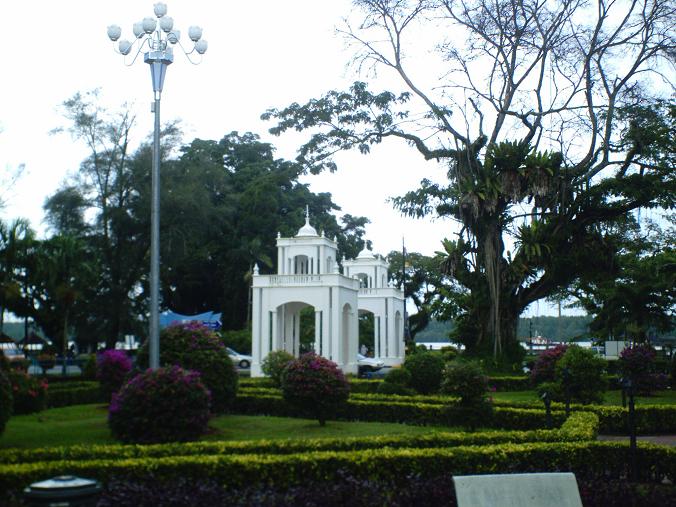
The monumental gate at Tanjung Emas

--------------------------------------------------------

The gates from a different angle

--------------------------------------------------------

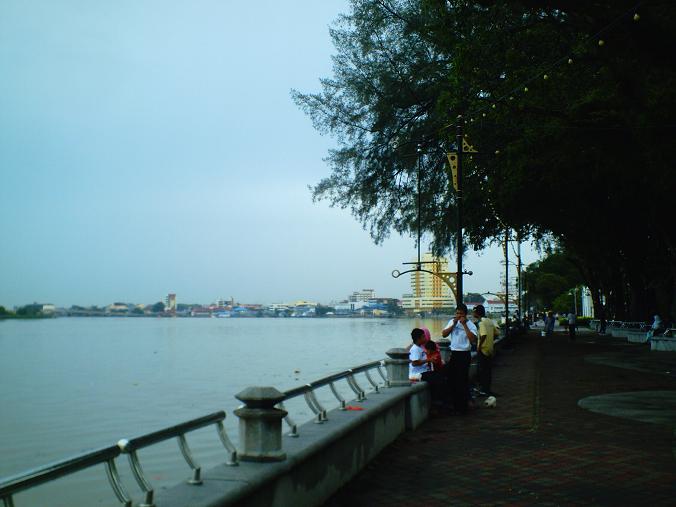
The town of Muar seen from Tanjung Emas

--------------------------------------------------------


The mouth of Muar river seen from the sides of the town's main bus station

--------------------------------------------------------

Muar Traders Hotel, used to be the UMNO Pagoh building. The 12-storey building is the first "sky-scraper" in Muar

--------------------------------------------------------

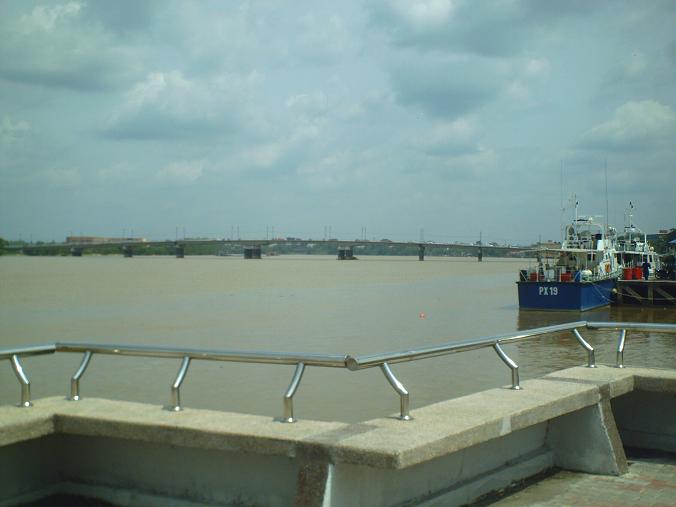
The old Muar bridge seen from the sides of the main bus station

--------------------------------------------------------


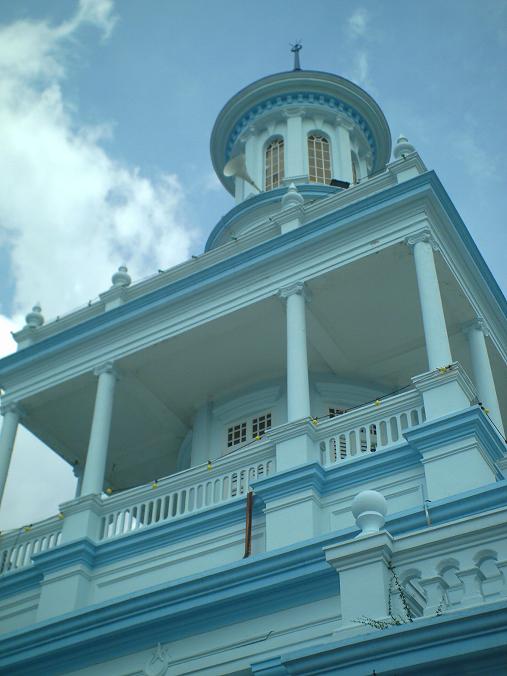
Muar's main mosque

--------------------------------------------------------


The tower at the main mosque

--------------------------------------------------------

The scene inside the main mosque

--------------------------------------------------------

Muar's second main mosque (an almost exact replica) situated at Tanjung Agas, the opposite side of Muar river, seen from nearby the original main mosque

--------------------------------------------------------

The second main mosque seen from sides of the main bus station

--------------------------------------------------------

The second mosque seen from Tanjung Emas

Sunday, February 04, 2007

Equestrian again? Why not?

To cap my pitiful attempt at updating this blogspot with old articles let me just represent again this article made as a run-up the the Kuala Lumpur Sea Games 2001 OK... Cheerio!!!

Document 18 of 401 
Publication : NST 
Edition : 2* 
Date : 19/07/2001 
Page Number : 36 
Headline : `Looking better than Chiangmai' 
Words : 481 
Byline : By Radzi Sapiee 
Text : 

EQUESTRIAN sports were introduced at the Sea Games in Singapore in 1983. Back then, equestrian consists of combined training comprising both dressage and show-jumping, and polo. 

The host nation were clearly ahead in the first discipline to win both the team and individual gold while Malaysia, fielding what was essentially the Royal Pahang Polo Club team with Tengku Mahkota Pahang Tengku Abdullah among them, thrashed Singapore and the Philippines to win the polo gold. 

Malaysia also won the combined training team bronze through Datuk Awang Kamaruddin Abdul Ghani, a pioneer in the first equestrian Sea Games team and laid the foundation for the future. 

Since then, equestrian has not been competed in the Games until Chiangmai in 1995, where Malaysia won the showjumping gold and individual silver, three-day eventing individual silver and dressage team bronze. 

That was also the last time equestrian made the Games. Malaysia proved formidable in both disciplines and are now acknowledged as the showjumping and dressage powerhouses, having won the 1998 Asian Games showjumping individual bronze and dressage team silver in Bangkok ahead of other Asean nations. 

The only equestrian discipline that Malaysia are struggling to catch up is three-day eventing. Thailand won both team and individual gold when the sport was introduced at the Chiangmai Games and they beat all challengers at the Asian Games to emerge champions.

Then again, Malaysia never had a proper eventing team until the Gemilang 2001 squad were assembled last year for the KL Games in September. The sport involves dressage, cross-country riding and showjumping and the riders used to be assembled ad hoc from other disciplines but we still won an individual silver in Chiangmai. 

The team are now fully dedicated to the job, having trained in New Zealand last year and they got five specially-trained horses from there to help them compete in KL with Chiangmai silver medallist Husref Abdul Malek to lead the charge. Thus, the Equestrian Association of Malaysia (EAM) have targetted an individual gold and a team silver this time.

For showjumping, EAM have targetted an individual gold but we still have Asian Games bronze medallist Quzeir Ambak Mahamad Fathil in the squad and younger brother Qabil, who has overtaken his sibling as the nation's best showjumper, to strengthen the team. 

For dressage, EAM have targetted both the team and individual gold. Qabil and his youngest sibling, sister Quzandria Nur, won the Asian Games team dressage silver and the team are still improving. 

Last but not least is endurance riding, which will make its Sea Games debut in KL. The sport is still an unknown quantity but we do have a world-class rider in Awang Kamaruddin, who have won international races since he took up the discipline in 1998. 

In total, Malaysia are targetting five of the seven equestrian gold medals on offer. 


THE DISCIPLINES 

EACH sport, except for endurance which only offers the individual gold, will have five competitors from each country. However, only four can fight for the team gold and only points from the best three counts. The fifth rider in each sport can still fight for the individual gold. 

Competitors for the individual titles are selected from the team events. 

For eventing, it runs concurrently, meaning the best person in the team event is the individual winner. For dressage, the best 10 riders in the team event will make the individual final while showjumping has an individual qualifying round combined with the first and second round of the team competition. The best 12 riders and any number of those who shared 12th place after that will battle for the individual gold. 

All equestrian sports will be held at the Selangor Turf Club, except for the cross-country section of eventing at Universiti Putra Malaysia (UPM), Serdang and endurance which will be held at a 105km course near Sg Labu and Kuala Lumpur International Airport (KLIA).


SHOWJUMPING 

THE Sea Games event will be AM5 - there will be a first round where riders have to clear the course, about the size of a hockey field with about 12 obstacles comprising 130cm-tall single, double and triple bars within a stipulated time. 

Failure to clear a bar will result in a fault of four points and time penalty of a point per second will be given to those who exceed the time limit. 

A fault of four is also given for each refusal - after a horse refused to make a jump. The competitor will be disqualified if his horse refused twice. 

The best riders from the first round - those who made the least faults or none at all - will proceed to the jump-off where riders will repeat the whole process using half the obstacles. Unless there is a clear winner from the first round, for example, if one rider has a fault of four while the rest has more, there is no need for the jump-off. Otherwise, the winner is the person who completed the jump-off with the least fault and the fastest time, exactly in that order. 

Currently, there are six riders in the national squad fighting through the national circuit to make the squad of five. 


DRESSAGE 

THIS is the most subjective of the equestrian sport as the points are mainly gathered in two parts - performance and appearance. 

One dressage rider said you could lose a competition simply because the judges don't like the way you look. The same applies to horses and dressage horses tended to be well-groomed with their hair often braided. So appearance matters. 

The main thing is to negotiate the horses through an outline of geometrical figures to be decided by the technical committee. 

Sometimes, the horses are made to walk and trot sideways, sometimes backward to follow lines or circles which only appear in the plan to be memorised by the riders and executed on the course. The idea is to get the horses to do it as daintily as possible, as if it was doing it on its own. 


THREE-DAY EVENTING 

AS the name implies, the event is held over three days starting with the dressage section, cross-country the next day and showjumping on the third. The rules for the first and third section is almost the same as regular dressage and showjumping except the points are converted to penalty points plus there is no disqualification for refusal in the last section.

The cross-country section involves galloping the horse on a 4km trail as fast as possible with minimum mistakes. The penalties from all sections are then added and the rider with the least is the winner. 


ENDURANCE 

PERHAPS the most gruelling of the disciplines, the Sea Games event will be held over 105km in four stages of 40km, 35km, 20km and 10km. This is equivalent to the smallest endurance race staged in Europe under the FEI (world equestrian body), where first-class races are always above 130km. 

Then again, the sport is making its Sea Games debut and many are still learning the ropes.

So far, only one 105km race has been held in the Peninsular for the Sea Games qualifying at the same trail to be used for the Games, near Sg Labu and Kuala Lumpur International Airport (KLIA). 

Veterinarian checks are held at the start, finish and in-between stages and riders are required to submit their horses within 30 minutes of arriving at the check points. Horses found limp, dehydrated or those exceeding a certain heart-rate (normally 64 beats per minute) will be disqualified with the riders. 


radzisapiee@nstp.com.my (END)


Equestrian sports gaining ground?

This sports page article was written sometime after the equestrian trip to France of 2000. Some of us then were in the midst of promoting equestrian sports especially endurance riding in Malaysia. Hence that should explain my particular excitement in approaching the subject. 

Document 46 of 452 
Publication : NST 
Edition : 2* 
Date : 06/08/2001 
Page Number : 39 
Headline : Equestrian scene promises to get bigger 
Words : 609 
Byline : By Radzi Sapiee 
Column Name : Extra time 
Text : 

THE equestrian scene is literally on the move. After being hit by the Nipah virus scare two years ago, which restricted the movement of horses, and the economic problems of 1997, there has been a sudden emergence of national events this year which will culminate with the three big ones this month. 

These are the Premier Cup final at Bukit Kiara Equestrian Resort this weekend, the Merdeka Masters at the 3QE Club in Kuang the following weekend and the Selangor Turf Club (STC) Equestrian Championship at Seri Kembangan at the end of the month. The Seri Kembangan event will be particularly interesting as Datuk Seri Dr Mahathir Mohamad will be competing for the first time in the carriage endurance category. 

Two weeks ago, the equestrian scene became abuzz when the 76-year-old Prime Minister, who attended the TNB Equestrian International 2001 at the Selangor Polo and Riding Club (SPRC), declared Malaysia already have world-class riders and that he was glad with the pace of the development of the sport. He also announced that Tenaga Nasional Berhad (TNB), a main sponsor for the Kuala Lumpur Sea Games, would hold a world-class endurance riding competition in Putrajaya. 

TNB chairman Datuk Jamaluddin Jarjis confirmed this will happen before the end of the year, adding they were working with the Police Mounted Unit and world-class endurance rider Datuk Awang Kamaruddin Abdul Ghani, who would engage other international top riders for the event. A week later, a Press conference was held to launch the KL International Showjumping (KLIS), which will be the first world Grand Prix event in Asia and outside the continents of America and Europe. The next day, Awang Kamaruddin, who last month was ranked sixth in the world, announced a team of 15 locals for the first Malaysia-Argentine friendly endurance competition near Buenos Aires (last weekend). 

He said among the main factors that have led to the growth was media interest, saying he kept a three-part feature on endurance riding which appeared in Timesport more than three months ago and the story had prompted Dr Mahathir to direct him to organise a world-class endurance event here. 

Timesport's coverage of the National Polo tournament at SPRC three weeks ago - the first such media coverage of the game in years - also contributed to the curent climate. Later, Dr Mahathir announced that another polo club would be opened soon. 

The Sea Games next month will also see the return of equestrian as a medal sport. Equestrian was included in the Games only twice before - 1983 in Singapore and 1995 in Chiangmai - but this time, endurance riding is included for the first time ever. 

But despite the rosy picture, National Equine Council secretary Malik Jeremiah cautioned against getting over-excited. "I am afraid the current euphoria won't last beyond the Sea Games. But I sincerely hope the scene would go on and grow," he said. 

Malik also advised organisers to pace their meets as too many, weekend after weekend, could `kill the horses.' 

"There are only so many riders and horses in the pool. Basically, we saw the same people at every meet because the organisers tend to concentrate on the high-end events," he said.

Malik suggested that the main events be spaced in between smaller events which should only cater to beginners and novices. There should be no Grand Prix class in these junior meets, he said. 

"That way, we can allow the top riders to rest their horses while giving the newcomers a chance to shine. This would increase our pool and make the sport's growth more meaningful," he said. 

radzisapiee@nstp.com.my (END)


Equestrian endurance in France

OK... Let me just post this article on equestrian some 7 years ago... You could say this was my introduction to the sports of endurance riding. Have a go! 

Publication : NST 
Edition : 2* 
Date : 15/11/2000 
Page Number : 41 
Headline : Wholesome family activity that captivates the heart 
Words : 891 
Byline : By Radzi Sapiee 
Text : 

CAMARADERIE is at the heart of equestrian sports in France, where horse-riding is a way of life enjoyed by all walks of life. This scribe recently followed Bukit Kiara equestrian resort executive director Datuk Kamaruddin Abdul Ghani to France and found a wholesome family activity that captivates the heart.

The stage was the FEI (world equestrian body) 2x100m equestrian endurance races at Montcuq, a small castle town at a hilly area some 200km north-east of the Spanish border. The participants, a mixture of blue blood horse-loving aristocrats, city slickers with penchant for the countryside, horse-breeders and even lowly farmers mingle with ease despite their different nationalities and upbringing. 

What was more astounding was the support they get from their kith and kin, nevermind that winter was close and temperature ranged from two degrees Celsius to a maximum of only 13 when the sun was up unhindered by the clouds. Many brought their spouses, kids and friends and toddlers were seen everywhere, playing with the family dogs that excitedly roamed the local fire department headquarters' ground, the makeshift centre for the event. 

Nearly 130 horse-riders came from as far as Australia and Brazil and the camaraderie of old opponents and friends making acquaintance with new ones was infectious as they settled their horses for the first of two-day races. 

"See, how friendly they are," said Kamaruddin as he waved to a few faces he'd met in other races. "If only our equestrian scene is like this." 

Having been on the FEI endurance circuit since 1998, the 55-year-old has become close buddies with the likes of veterinarian-turned-horse breeder Jack Begaud, who was last year's best European rider, and the Just family, who owns a 72-hectare farm with 75 horses near the Spanish border. Kamaruddin has used horses from Begaud's stable but this time, he decided to try Hose and wife Marie-Noelle's six-year-old Gusty De L'Aigual. 

The fun really began when the race started. All riders were flagged off simultaneously - each free to start from the front or behind according to their whims and tactics - at 8am from the town's main street before they head off to the twisting farm trail leading to the next stop at Caltenau Montratier. 

The town itself is just about 20km east of Montcuq but the trail which at certain points cut through the narrow country roads covered a distance of 35km. The points were where friends and family can help. They became the crewers - the support people who supplies food and drinks for both horse and rider. 

Some even came in as many as four cars for a rider with the richer ones bringing their own cobblers and equipment in mini-vans, making a cavalcade of more than 200 cars to inch up and down the winding roads. Traffic only eased up when the fast riders got separated from the slow ones whose crewers had to wait a while longer before springing into action. 

When the time came, kids from as young as 10 helped to pass bottles of water which the riders used to wash the horses from the neck up, a surprising new discovery for this scribe considering the chilly condition out there. 

"The horses are made for temperate climate and easily heats up after a run," explained Kamaruddin as he rested at the veterinarian checkpoint at Caltenau Montratier. "We use the water to cool it down." 

Hose and Marie-Noelle fed Gusty with hay, carrot and apples while daughter Celine and her friend Latitiea massaged the beast with lavender oil. 

Upon arrival there, each rider was given 30 minutes to calm the horse's heartbeat to below 64 beats per minute and do whatever necessary to ensure it can walk properly without limping or risk being disqualified. Free hands like mine (when Kamaruddin didn't request for assistance) walked about to see how the others were doing. 

The usual question: "Is your horse OK?", in French or otherwise, was answered by the universal `OK' with a thumbs-up or the other way around, meaning you are on the way out, binded even the most quite of strangers. 

The town square which became the checkpoint was abuzz with activity as every townsfolk and visitors converged to partake in the festive atmosphere. 

An hour later, Kamaruddin was ready to be flagged-off for the second stage, another 35km endurance ride to La Bastide Marnhac. Some riders had left earlier while others were still going through the veterinarian check. 

"Whoever completes the check early gets to continue sooner," he said. 

The official looked at his clock and began the countdown. Five, four, three, two, one and off he goes. Hose, his family, Latitie and myself who, by then have became Kamaruddin's fifth crewer, lunged to get our gear before we ran off for our two cars to catch our rider at the next point. 

By the time the race was done on the next day, we had virtually recognised every face on the field, never mind that some like me came with a limited French vocabulary of "Bon jour (good day)" and "Sava (ok?)". 

There is no doubt that camaraderie abounded there and newfound friends made the memory even sweeter, making me wish that we could have such an endurance race in Malaysia really soon. (END)


Hello again!!!

Well, look who's here! The Internet technology has grown by leaps and bounds since this blogspot was last updated that I almost didn't notice the face of you, reader (yes! you! The one reading this article with a quizzical look on your face)... Puzzled how I can see your face although your computer is not attached to any video recording and broadcast device? Well, that's the wonder of technology... Just kidding!!!
Don't worry, I can't really see you now except perhaps in my mind's eye... So feel free to touch any bodyparts you feel comfortable with... Ha! Ha!
Hmm... This whole idea of being able to see other people through your computer screen without the aid of video camera reminds me of a stupid joke some people on the Net pulled a few years back... A friend one day came excitedly to me telling they've just created a new software making a normal computer screen capable of catching what's outside, just like photography. And so there I was going through the webpage smiling for a picture before clicking the button which indicated my picture has just been taken. Then came the message: "Wait a while for the picture to be processed" (or something like that)... So I waited excitedly like a fool... For I used to be very very excited with new technologies... Surely a software which can turn a normal computer screen into a camera is worth getting wide-eyed for...
A few seconds later, the truth was revealed... Yes , a picture did came up and yes a nice smiling one too... That of a babboon... Hah! The software must be so advanced that it managed to catch the essence of my mood at that particular moment... Yep... A babboon so excited to be fooled...
Anyway, enough of this. Actually I just want to keep this blogspot updated after returning from travelling up north nearly a week ago - I've just spent almost a month backpacking in Pulau Pinang, Kedah, Langkawi and Perlis (the first week was actually spent at a nice hotel in Prai keeping a cousin who was outstationed company) and the trip including climbing Gunung Jerai alone at night... Malam Jumaat (Thursday night leading to Friday) some more if you know what I mean...
So here I am... With lots of stories to tell but too lazy to actually put it properly in words unless come the urge. Since leaving my job as a journalist writing in English at the New Straits Times in 2001, most of my writing has been in Malay, my mother tounge... Due to a renewed interest in anything Malay sparked by the personal search to understand my family roots.
Meanwhile let me update this blogspot with something else... Wait OK! Cheers! :]

Monday, January 15, 2007

Pictures in Muar

Greetings dear readers. I'm currently travelling up north. For a week I lodged at the Pearl View Hotel in Seberang Prai. A cousin who is an engineer with Petronas Kuala Lumpur had a job in Prai and so he asked me to keep him company there. Yesterday, he returned to KL while I went to Pulau Pinang city and slept at the old mosque at Lebuh Aceh.
Now I'm at Batu Feringgi to take some ocean air dan complete some writing. That's when I realised, the writing for the segment "Laksamana pulang ke Perak" for the coming latest edition of the Malay tabloid Kencana has been delayed for so long. Coincidently, Kencana's editor called to ask for news. So I was moved to complete the segment.
Thank God, after struggling with some cold and writer's block, I managed to complete the writing before 11 at night. The pictures needed are also in place, just needed to be sent in the best way possible... And so, under the circumstances, the Internet is the best way and that is why I chose to put the pictures as the latest update in this blogspot. Witness the few pictures taken in Muar early 2007... Go on...

-----------------------------------------------------------

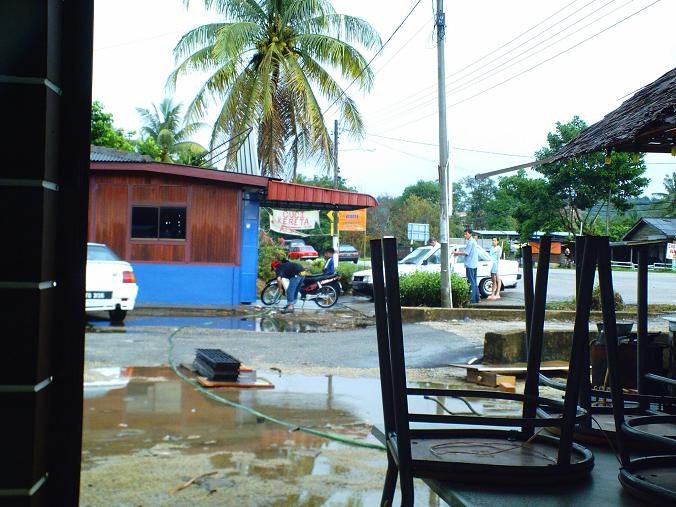
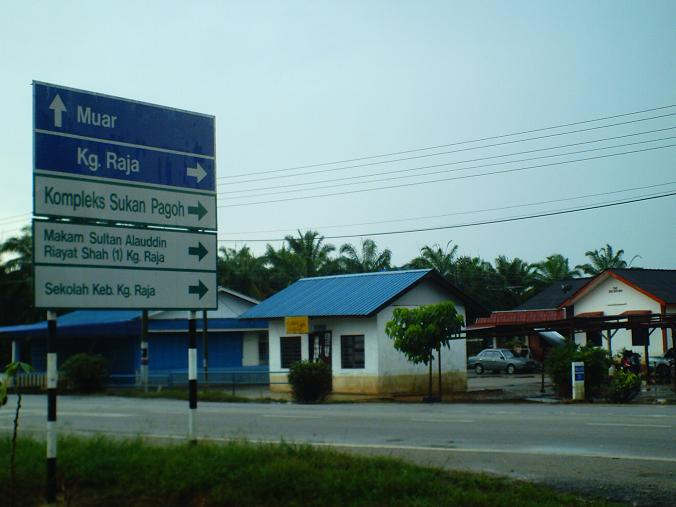
Below are pictures taken near the Kampung Raja/ Pagoh junction. At the time, I was on the way to visit the tomb of Sultan Alauddin Riayat Shah (an ancient Melaka king). Coincidently, Pagoh is among the area badly hit by the extraordinary flood in Johore at the end of 2006. The pictures were taken in a condition when the flood had receded only 2 days ago.


-----------------------------------------------------------

Picture showing directions for junctions to Muar and Kampung Raja, also the tomb of Sultan Alauddin Riayat Shah.


-----------------------------------------------------------

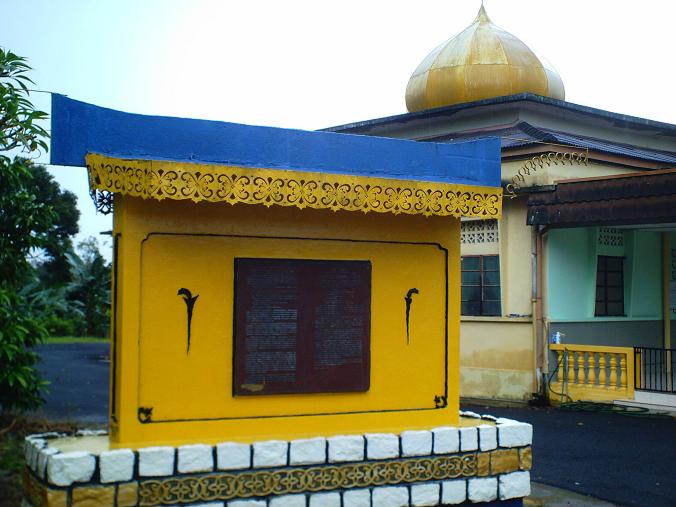
A memorial containing information on the tomb of Sultan Alauddin Riayat Shah. Behind is the old mosque beside the tomb.


-----------------------------------------------------------

A bit of information on the tomb.


-----------------------------------------------------------

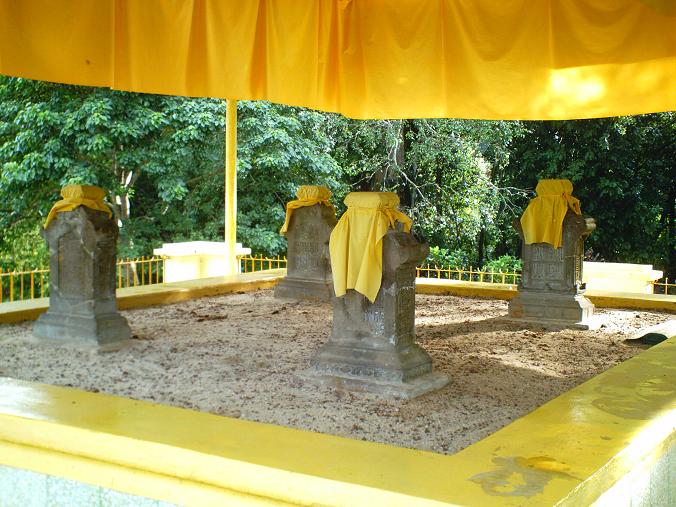
The tomb of Sultan Alauddin Riayat Shah. On the left is the tomb of Puteri Berdarah Putih (the white-blooded princess)


-----------------------------------------------------------

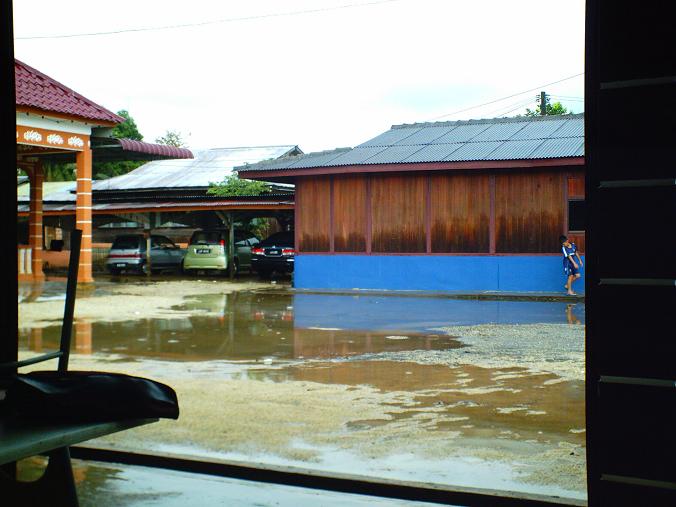
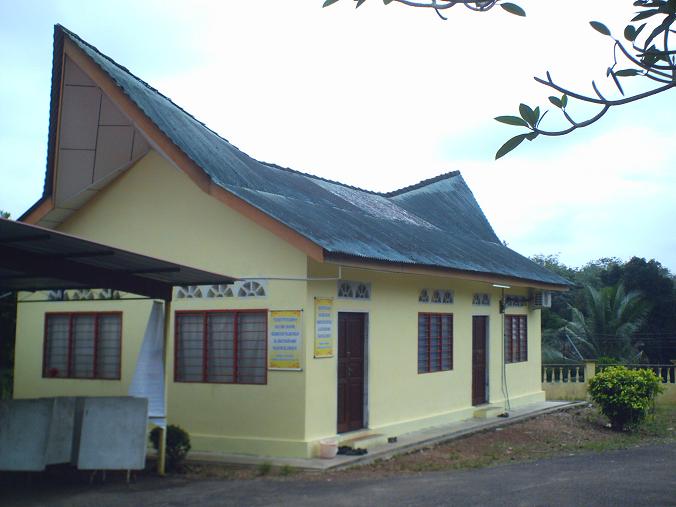
The hall in front of the mosque which serves as one of the flood relief centre


-----------------------------------------------------------

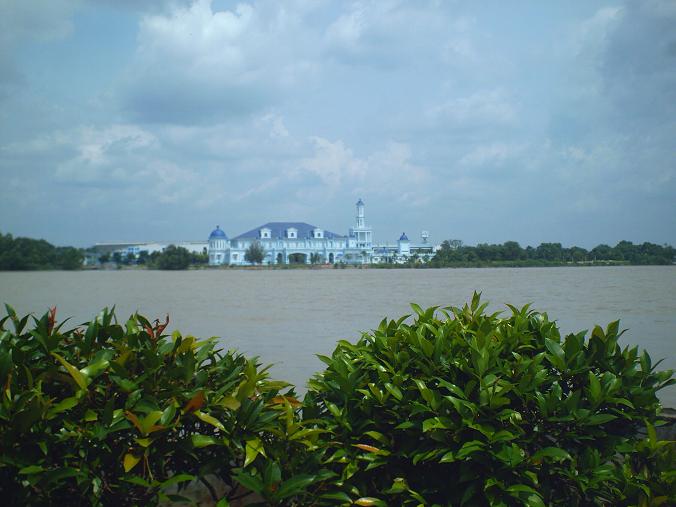
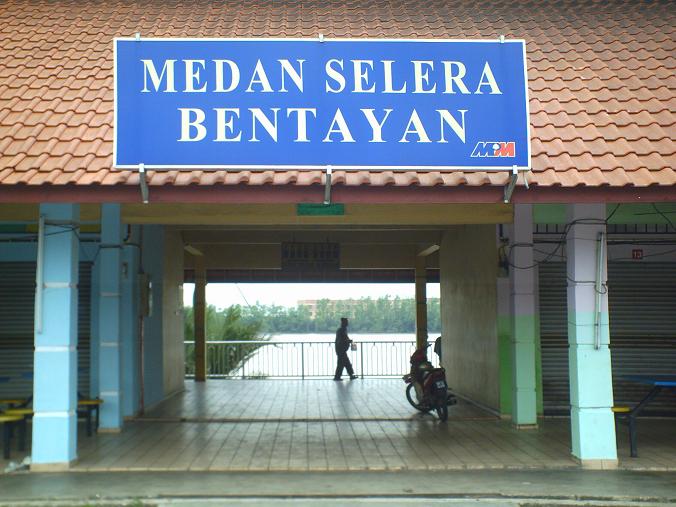
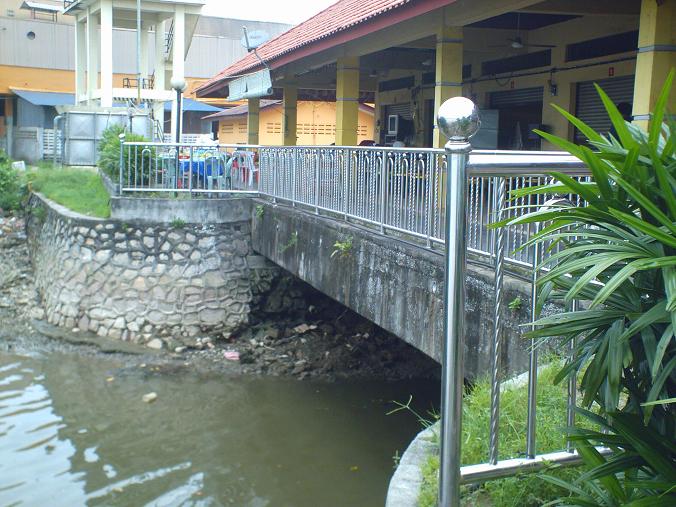
The river Bentayan with the Bentayan Food Court in the background


-----------------------------------------------------------

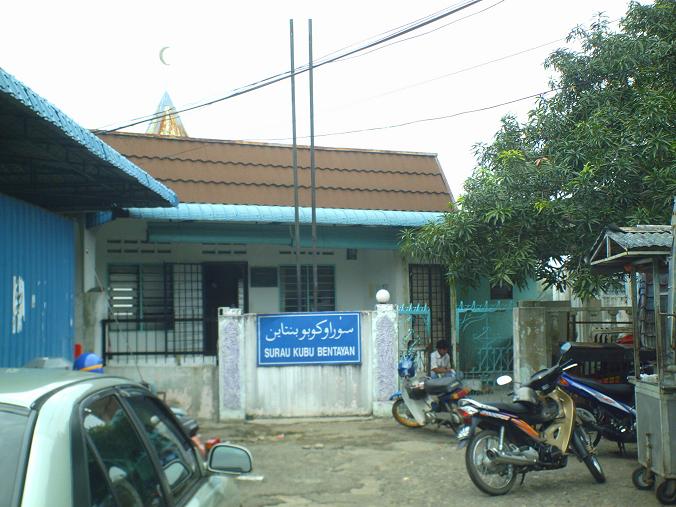
The small praying hall next to the fort of Bentayan


-----------------------------------------------------------

The memorial marking the fort of Bentayan, the last line of defence for the Malay Melaka Sultanate before losing the war to Portuguese in 1511.


-----------------------------------------------------------

Bentayan Food Court situated on top of Bentayan river. The man in the picture is actually standing right on top of the mouth of the Bentayan river!


-----------------------------------------------------------

This is how the Bentayan river-mouth looks like...

Monday, January 08, 2007

Endurance 3

Hmm... Reading back old articles on endurance horse-riding did bring the smiles to my face. Come to think of it, I wrote it while the sport was still struggling in its infancy in Malaysia. Now, it has become quite popular to the extent that the latest Yang di Pertuan Agong of Malaysia (effectively the king of Malaysia but for a period of 5 years, chosen in rotation among the 9 state monarchs) was to become one of the riders at the Asian Games 2006 in Doha, Qatar. Unfortunately, the dates clashed with his own installment as the king on 13th December. Anyway, this is the last of a trilogy of endurance horse-riding articles... Enjoy it! :] 

Publication : NST 
Edition : 2* 
Date : 05/05/2001 
Page Number : 36 
Headline : Alamdin's love benefits the masses 
Words : 989 
Byline : By Radzi Sapiee 
Text : 

* TO know a person is to love a person. The same principle applies to sports and endurance racing is no exception. 

Some like 56-year-old Bukit Kiara boss Datuk Awang Kamaruddin Abdul Ghani was totally smitten, forsaking other riding disciplines he has known just to stay in the endurance scene. 

Polo, showjumping, dressage have no significance for him now, having tasted his first endurance race at the 1998 World championship in Dubai. He has spent his savings and uses his business acumen to get sponsorships to participate in international endurance races until 2006. 

Others like Putrajaya police mounted unit's Cpl Azhar Abu Bakar, the only Malaysian to finish the Dubai race, cannot afford to emulate Awang Kamaruddin but remained in the sport, albeit at the much lower local level. 

Endurance racing is still alien to most Malaysians but the few who have indulged in it are permanently hooked. And a recent event in Terachi, Negri Sembilan might just expose the sport, or at least simple horse-riding, to the rest of the population here. IF horse-riding is available only at exclusive clubs, then only a few Malaysians will be accessible to it, much less fall in love with the sport. 

Alamdin Abdullah was a project manager for the upcoming new federal capital Putrajaya when he rode a horse for the first time, through friends at the city's police mounted unit, the pioneer group who will make horse-riding patrols a standard when the whole area is fully developed. 

Most of the policemen there are strong cross-country riders. Some like the unit's head Sergeant Nasir Sahari had patrolled the length of the Thailand-Malaysia border on horseback and three were among the first Malaysians to participate in endurance racing, the 1998 World Championship in Dubai. 

They encouraged friends to take up riding at their place and their trails at Putrajaya soon became one of the locations for local races when the Malaysian Endurance Racing Society (MERS) started their 40 and 60km events last year. 

By then Alamdin who has completed his portion of Putrajaya has become a regular endurance rider and with his passion growing everyday, he decided to bring the sport closer to his home in Seremban. Thus came the Sea Games qualifying session held at Terachi last month, the first endurance race held in Negri Sembilan and the first in the peninsular outside of the usual confines of club grounds, plantations or project sites. 

The area was chosen for its elevated natural countryside and his son-in-law's hectare of `tanah pusaka', which belongs to the mother due to the State's matriachal Minangkabau rules, became the converging ground for the meet. 

But he is not a member of the governing circle of equestrian figures. Alamdin wanted to hold the event so bad that he pooled RM55,000 to cover the expenses including boarding for riders and bringing their horses in. Otherwise, they might not come and he would not get the numbers. And he must still get the right people to sanction the event and its results. 

Luckily, he had a valuable ally in the police' SM Shuhaimi Kamaruddin who is the Equestrian Association of Malaysia (EAM) endurance comittee chairman. 

"He pulled in the necessary people to make it a Sea Games qualifying event. There were some who want the event to fail as it is organised by an individual and I don't want this to happen," he said. 

Alamdin said the State Government were also excited about the project and he got the local assemblyman, District Office and the local police to help. 

"We even used temporary stables from the Police and tents and covers from the nearest Army camp. The best thing is, the project involved four kampungs as headmen and folks worked together to ensure smooth running," he said. 

A total of 28 riders came with an entourage which includes friends and family members who became their crew. Their job is to feed both riders and horses at rendezvous points along a 22km loop passing through padi fields, secondary jungle and rustic traditional villages. 

For the first time ever, the folks there got to mingle with riders and see some horses up close, reminding this scribe of the scene in Europe where equestrian is a way of life and endurance racing a carnival for all. The atmosphere was so alive that many riders declared this as the best endurance race they have ever been in. 

For this writer, this is the first ride here to really involve ordinary folks, just like when I tagged along with Datuk Awang Kamaruddin Abdul Ghani when he competed in the FEI 2x100km race in Montcuq, France last November. Then, more than 100 international riders competed and each took at least one car of crew - family and friends, even babies and dogs along - while some came with up to five cars following nearby, as we passed through many towns which housed the veterinarian check points, making it a merry event indeed. 

Terachi was more down-scale with only one place serving as the vet check but the whiff of Montcuq is there and this could pave the way for a full-scale FEI meet just like in Europe, Australia of America. 

Alamdin when suggested this said, he would try to get the State Government in. He said they are interested in having an annual event there and I suggested a meet of at least 105km in one big loop starting next year, involving more districts. 

By then we should have a substantial number of qualified South-East Asians due to the Sea Games and we could get Awang Kamaruddin to bring some international riders to join. The sport is so down to earth that it would not only create tourism opportunities as riders make their way down the countryside but also get more Malaysians to take up horse-riding.


radzisapiee@nstp.com.my (END)


Endurance 2

Continuation from the endurance horse-riding article before... 

Publication : NST 
Edition : 2* 
Date : 04/05/2001 
Page Number : 36 
Headline : Endurance is no walk in the park 
Words : 1000 
Byline : By Radzi Sapiee 
Text : 

NOBODY laughed when Azhar Abu Bakar took nearly 20 hours to finish the 160km 1998 World Endurance championship in Dubai. If anything, many were amazed. He might have finished last among 78 riders but there were more than 80 other riders who didn't even last the distance. 

In fact, Azhar created history when he became the first Malaysian to finish an FEI (International Equestrian Federation) race, a Category A meet and a world championship to boot. He was also the only Malaysian to finish then. 

Earlier, the field were amused when Azhar and four other Malaysian riders, our first representatives in the sport, came to Dubai with criollos, Argentinian-bred horses which they said is only good for field work. 

"Even the Argentinians laughed at us. Everyone was using Arab-breds and even then they know it's hard to finish. So we were the butts of their jokes," recalled Datuk Awang Kamaruddin Abdul Ghani, who also competed in the meet. 

So why the fuss over Arabian horses? For one, it is a very beautiful creature admired by horse-lovers. But the real advantage is the breed has the strength and stamina to last the distance, along with a good recovery rate. 

Pushing a tired horse to go the distance is a taboo in equestrian as this is considered as cruelty to an animal. Horses have been known to die from dehydration and such and thus veterinarian checks are conducted in stages over a race. 

Checks are also conducted before a race starts as a horse might be sick overnight. At the later stages, including the finish line, horses found limping or whose heartbeats exceed certain rates (normally 64 beats per minute and horses have to be submitted for a check within 30 minutes of arrival at designated gates) will be disqualified along with the riders.

The same goes for dehydrated animals. Riders with fit horses can submit their animals earlier and start the next stage sooner. A winner is the person who completes a whole course in the shortest riding time (vet check-time subtracted) without failing the checks, meaning the first rider to arrive might not necessarily win. 

For example, this writer was in Montcuq, France last year to accompany Awang Kamaruddin who participated in the two-day 2x100km championship there and saw the then reigning champion, Tareq Tahir, disqualified over a silly mistake. The frontrunner thought his horse was in the clear when he personally checked the heartbeat rate at 50 per minute. However, the rate shot to 70 when he checked the horse in, all because, believe it or not, the horse got excited when the crowd cheered! 

That is why Azhar's finish in Dubai was a big feat. And that is also a reason the Malaysian Endurance Racing Society (MERS) were created at the end of 1999. Previously, there were efforts to get Malaysians to do 100km races here immediately but this had mostly ended up with sick horses. 

As FEI rules apply for races 90km and above, MERS introduced their own and started having 40km and 60km rides. Their secretary, Rosli Dahlan, said they called it rides to discourage inexperienced riders from being overzealous. 

"If it's called races, they might push and kill their horses," he said. 

Under MERS rules, both rider and horse must finish a 40km ride twice to qualify for 60km.

They must do the same to qualify for 80km and so on. MERS started conducting the rides last year but had to abort 80km rides due to lack of qualified participants. 

But they have pushed for endurance riding to be introduced in the coming Sea Games in Kuala Lumpur and that will cover 105km, equivalent to an FEI Category B event. So they must start a series of 80km qualifiers soon. 

Their first 80km event was run in Sungai Buloh a month ago although there was only one rider. Luckily, the 40km and 60km rides have more than 20 riders. The qualifiers only increased in number when nine riders competed in the second 80km event at Terachi, Negri Sembilan in March where six finished, the most so far in the peninsula. 

But its real significance is the fact that the event is the first ride here conducted in a real countryside. Unlike previous rides held on club grounds or plantations, ordinary folks, including villagers from the affected kampungs, were involved from the start while others came by the droves. 

Some, seeing a horse race for the first time, were perplexed when they saw the riders going through what looked like a walk in the park. 

"This is a race, isn't it. Aren't the horses supposed to gallop?," one asked. 

Well, we've already explained it. At least we know they are interested. 

If they know they could get a horse for as cheap as RM500, a fact no one would mention in the proud circle of riding clubs who pride themselves in showjumping and dressage, they might also want to give endurance a try. 

This is the real milestone that Terachi event has brought and we'll explore this further in the next article. 


NEXT: Riding is for everyone (END)


Endurance 1

One of the main reasons I started this blogspot was to start an English adaptation of the Malay historical and adventure novel "Berpetualang ke Aceh: Mencari Diri dan Erti" (literally translated as "The adventurous trip to Aceh: To find self and meaning"). The idea is by translating/adapting bits and pieces from the novel whenever time allows and whenever I feel like it, I will have enough material to publish an English version, God willing. The problem is I'm also too preoccupied wih other things. It's been a while since I did an adaptation from any part of the novel, the last one was in The Tale of Keramat Kuala Bidor 3 – And so the story goes…. But I need to get this blogspot updated, so let me take the lazy way out by presenting some of the articles done while being a journalist at The New Straits Times (again?). It happens there's a series of articles on endurance horse-riding begging to be re-displayed so here goes... 

Publication : NST 
Edition : 2* 
Date : 02/05/2001 
Page Number : 38 
Headline : Endurance riding should come easy for the common folk 
Words : 650 
Byline : By Radzi Sapiee 
Text : 

FOR most Malaysians, owning a horse is a luxury almost like owning a Ferrari. Equestrian is viewed as a privilege of high-society and when people think of horse-riding, they tend to think of Royalties playing polo or proud well-dressed gentry manoeuvring horses over bars in showjumping or daintily putting it through small paces for dressage. 

But in countries like the United States, Australia and Europe, equestrian is a way of life as a horse is just another farm animal like a cow or a goat. Except that they are much more enjoyable, rideable and respond better to human call. 

Thus endurance riding, basically riding a horse over a distance, comes naturally to the commonfolk rather than polo, showjumping or dressage. 

Malaysia, too, have an equestrian culture in parts of Kelantan where farmers still breed horses from the old days of the Pattani kingdom (now part of Thailand) and Sabah, famous for their traditional Bajau horsemen. But they have mostly ponies and are confined to their groups. 

The modern history of endurance racing started when a Wendell T. Robie set up the 160km Tevis Cup in America in 1955. He wanted a sport which `involved rapport with one's horse, companionship on a trail and the opportunity to share the incomparable scenery of my home territory', referring to his native countryside near Lake Tahoe. It was a huge success and more races followed in America. Australia embraced the sport in the 60s and Britain and the rest of Europe followed by the 70s. 

Soon the Arab countries followed suit. Arab-bred horses became the only type used for endurance racing, due to their strength and fitness, and it is only natural for countries like United Arab Emirates (UAE) to subsequently become huge promoters. 

In 1998, they invited countries affiliated to the FEI (world equestrian body) to compete in the World Endurance championship which they hosted in Dubai. They even paid for boarding and flight for those who qualified. 

Malaysia were invited and five locals - Datuk Awang Kamaruddin Abdul Ghani, Dr Nik Ishak Wan Abdullah and Police mounted unit's Azhar Abu Bakar, Sharaf Ibrahim and Zulkefli Sudin - were selected. 

Equestrian Association of Malaysia (EAM) endurance committee chairman SM Shuhaimi Shamsuddin said several riders went through the selection process held over increasing distances to qualify under FEI rules. 

"This resulted in the five completing a 120km course near Bangi. We were the first Malaysians to get involved with the sport," he said. 

Bear in mind that an endurance race is not very straightforward. Not only is it gruelling, there are veterinarian checks held at stages where horses which failed to meet certain fitness conditions are disqualified with the riders. More than 30 countries sent five riders each to Dubai. After the initial vet check, 162 riders were allowed to compete in the World championship. 

Malaysia became the butt of their jokes when our riders arrived with Criollos, Argentinian-bred horses said to be good only for farm work, but managed to silence the critics when Azhar became one of the 77 finishers. 

Whatever, the seed for endurance racing in Malaysia has been planted. A year later, Sabah set up their own endurance body and started their own short distance races and by 2000, they have conducted 80km races, equivalent to the pinnacle of junior championships on the world calendar. 

The Malaysian Endurance Racing Society (MERS) were formed later that year. Shuhaimi said MERS came into being to allow ordinary folks to participate. Otherwise, one must go through EAM and only those who are affiliated with riding clubs (read: with money or support) can join the association. Thus starts a chapter in the Malaysian equestrian history and this would soon culminate in an event that could well do what polo, showjumping and dressage have failed - to bring the field to the masses. 

* NEXT: Creating an equestrian culture in Malaysia (END)

Saturday, December 30, 2006

Wanna drag?

This one reminds me of the days I used to travel up and down, 70km per way with my favourtie big bike to Sepang to cover motorsports events at Sepang International Circuit... Used to really enjoy walking the whole length on the 1km-long grandstand areas and the pits in front with motor fumes filling the air like some sort of aphrodisiac... For men who love motorsports that is.
Hmm... Suddenly snapshots of the sort of girls you'd see at the racing tracks comes into mind... Waif, model-figure, with lotsa beautiful figures to look at, with ready smiles, always nice to people like me... No... No... I left that sort of life a long time ago... I wanna be a good boy, please... Ha! Ha!
Well, do have a look at this article... :]

Publication :
NSUNT
Edition :
2*
Date :
03/09/2000
Page Number :
41
Headline :
These cars are not a drag!
Words :
850
Byline :
By Radzi Sapiee
Text :
THERE was no mistaking the sound. The loud growl of the 8.5 litre V8 2,000 horsepower drag car engine could be heard, even from the far end of the dining tables of the air-conditioned hospitality suites at the paddock building above the pits at the Sepang F1 Circuit.
The distinctive sound made avid motorsports fans in one of the suites rush towards the glass window, even though Finance Minister Tun Daim Zainuddin was still in the suite giving out the prizes for the Silverstone Merdeka Millenium Endurance 12-hour race.
The crew members and some of the racers who were resting after the gruelling long drawn race ran from behind their pits to be as close to the 1km-long straight as possible, knowing there's a spectacle in store. And true enough, it was a sight to behold.
The first drag car, yellow with huge rear wheels, zoomed off past the straight to a top speed of 340kph before two parachutes sprung out from behind to slow it down to a more managable speed. That whole run took only seven seconds.
The second car, longer and black, had the fans screaming more as thick smoke billowed out to tickle their fancy but unfortunately, it didn't get to top speed as it veered a metre or two to the right.
"The track was slightly slippery. So I had to take my foot off the pedals," said the Australian driver Dean McClennan. The cars can accelerate 0-100kmh in one second, twice faster than the most powerful Formula One car and McClennan is not taking any chances.
According to the more experienced first driver John Payne who is also from Australia, the straight at Sepang is not exactly level and if a car starts veering off, it could just crash into the sides. Nevertheless, the cars and the drivers who were specially brought from Brisbane, Australia to impress the local crowd coming for the inaugural 12-hour race have done their job.
Earlier, on the eve of Merdeka Day, they have made two sets of two runs each and the second, held in front of a crowd of 25,000 really got them going as the sparks coming out from the wheels can be clearly seen in the night.
Two drag cars, dubbed the "Funnycars" by the drivers due to its closeness to streetcars but slightly odd shape were shipped from Brisbane to Malaysia for the show and Zaifa chief executive officer Zainal Osman Mohamed who paid the bill of RM100,000 said it was a prelude to start drag racing here.
The original plan was to let the two cars race each other like in any drag race but this cannot be done due to the slightly lopsided Sepang straight.
"We also normally use a special glue compound poured on the track to get the best traction but obviously we can't do that here," said the 48-year-old Payne who have 25 years of drag racing under his belt.
Their engineer David Blee said even then, the cars they used were second-grade in the world of drag racing.
"The best ones churn out 6,000 to 7,000 horsepower and can reach a top speed of 510kp from a stand-still in just four seconds!" he said.
Both types use rocket fuel - methanol for second-grade and nitro for the top notch. An F1 car, on the other hand, spews out 800 horsepower using normal but advanced petrol that is intended to reach average road-users later.
But that doesn't mean that drag racing is expensive. Rob Oberg who puts the show together said the cars cost only RM100,000 each.
"The engines cost RM80,000 each. We have workshops specialising in making such engines in Australia and put the rest together by our selves either using locally-made parts or those from America where drag racing is huge," he added.
This is peanuts compared to the cost of an F1 car and that is why Oberg reckons it could catch on in Malaysia especially among the youngsters.
"The idea in drag is to race two speed machines, even a normal motorbike along a straight. If one machine is less powerful, we could introduce a handicap by allowing it to start a few seconds ahead," he added.
He said, off-street drag racing was encouraged by the Australian police who wanted the young to get their kicks at the right places.
"We could start with souped-up normal cars before moving to the supercharged ones. In time, Malaysian workshops could even make their own methanol or nitro-ran engines or acquire it from overseas," he added.
For the record, drag cars are the fastest machines on earth and only slower than the sub-rocket machines that are used to break world land-speed records.
Although the Sepang show provides only a sample of it, given the response, there's no doubt that many would want to get involved and given the relatively low cost, drag racing could have just firmly planted one foot in Malaysia.
(END)

Sharpshooter

This is an old sports article. Coincidently written just a month or two before I left the whole official journalism business... Or was made to leave because of the whole office politicis...
Oh well, I did have some very fond memories at the New Straits Times. After all, I grew up and learned English reading the daily. It's just the whole political game of pandering to the powers-that-be is just too much....


Publication :
NST
Edition :
2*
Date :
28/08/2001
Page Number :
38
Headline :
Only cool heads count
Words :
657
Byline :
By Radzi Sapiee
Text :
TAKE a 50 cent coin and place it 10 metres away. Now, take aim with a pistol and try to shoot a hole in it. Tough? Maybe not for the national shooting team preparing for the Kuala Lumpur
Sea Games. For the national shooters who will compete at the Games next month, shooting a target that small is not a problem. The challenge is to hit it right at the centre and everyone who understands a bit of physics, know this is easier said then done.
The principle is every reaction carries an opposite reaction. In a gun, the force that shoots out a bullet is countered by a recoil which a shooter must absorb properly. Failure to do so will cause the the nozzle of the gun to move away from the intended line of fire and you'll be off target.
Now imagine the 50 cent coin divided into ten equally-spaced concentric circles. The smallest circle which in shooting contains the bulls-eye should have a diameter one-tenth of the original circle while its size is only one per cent of the whole coin. In the preliminary rounds of the 10-metre events like the air pistol and air rifle, one could shoot within that area for a perfect score of 10 but come the final, a 10-pointer shot is considered just good.
One must try for the dead centre where you can get a perfect point of 11 but even a 10.1 point shot, just slightly inside the smallest circle is considered excellent enough. Thus pressure plays a big part in shooting.
Breathing at the wrong moment, or a high heart-beat rate is a definite no-no. Pull the trigger at the wrong moment and the slight twitch caused by even the inner mechanism of the body is enough to put one off contention. Don't even try to shoot when your fingers are a little shaky.
Former world champion, Ukraine-born Irina Maharani said among the measures needed to be on target is to lower her heartbeat to about 54-per minutes or so. For the record, the heart-rate of a reasonably fit human when calm is 70.
Hameleay Abdul Mutalib, who won a gold at the South-East Asia Shooting Championships in Bangkok last month, relies more on getting the correct "rythm", to be in-sync with all body movements from breathing to heart-beat.
Other events which use the 25m or 50m ranges or clay shooting can afford bigger margins of error but the same principle still applies. One must be very still and relaxed to get the job done but since this is not always possible, one must be able to minimise all disturbances - at least for a
shot.
That is why National Shooting Association of Malaysia (NSAM) secretary Mej Jasni Shaari downplayed the results achieved at the SM Yong Trophy held at the Subang range last weekend, although it was the last national meet before the Games.
Before the SM Yong Trophy was held, Jasni predicted that the Games shooters will not break any records, nor show any significant improvement and he was right on target.
"What is more important is not to place the shooters under any kind of pressure," he said.
The 1998 Commonwealth Games air rifle champion Nurul Hudda Baharin was placed under the spotlight and she finished seventh in the event on Thursday against a field of local shooters while none of her Games team-mates made the top five.
Jasni, when asked to comment on Nurul's finish, said that the event is no longer on their Games medal target list although a few months back, Nurul was expected to deliver the gold.
Pressure will definitely decide the Games shooting medal tally at the end of the day. So the less pressure their shooters are under it, the more medals will come Malaysia's way. radzisapiee@nstp.com.my
(END)

4x4

Greetings dear readers... Just feel like updating this blog with some articles written at the New Straits Times starting with this...

Publication : NST-LTIMES Edition : 2* 
Date : 28/10/1997 
Page Number : 07 
Headline : Warming up to 4x4 challenge 
Words : 1272 
Byline : 
Text : 

THE day was hot and humid. The stage, a dusty laterite hilltop, was interspersed with cracks and bushes. In the distance, something was roaring and rumbling, leaving behind a trail of dust and dry mud, as it made its way towards the plateau, the vantage point we were on. 

On the left side of the plateau, facing the distant skyline of Ipoh, was the television crew. Photographer Roslin Mat Tahir and I were sitting beside a nearby bush. Others were standing behind the route markers at one end of the plateau. 

Eager for action, our eyes were focused on the almost vertical laterite ramp in front. Will someone dare to make the jump and soar into the sky? From the roar emanating from the spectators, we knew this was definitely going to be "the jump". Yes. This was it. This was going to be a fully air-borne baby. 

And there it was. Out of the blue, a huge piece of machinery appeared, its belly fully exposed. Its four tyres spun wildly in the air. From where I was sitting, it looked as if the vehicle was a full two metres in the air. Yes! 

One second. Two seconds. It's back on the ground. Right on cue, the air was resounding with the triumphant shout of those present. No one could deny it. That was definitely one hell of a jump. 

OK. It might not really be that great. But that was the only car that flew on all its four wheels throughout this special stage (that is, circuit and obstacle test) held at Ulu Kinta, or any special stage throughout the whole five days of the National 4x4 Challenge for that matter. 

Hungry for action, I was looking forward to seeing some stunts. Maybe a flip in mid-air or a flying jump across a 100-metre deep gorge. The special stages include uphill and downhill driving on hole-ridden tracks, reversing into a river using the winch and driving across a deep mud pool. 

Although tough and rather tricky, they were quite tame in my opinion. But then the competitors - 42 drivers and co-drivers in 21 4WD vehicles - were mostly city folks, executives, businessmen, contractors and such, not stuntmen. And the Challenge was not really the ultimate. 

As event director Luis Wee constantly reminded me, the National 4x4 Challenge was a warm-up and a prelude to the coming international Rainforest 4x4 Challenge at the end of the year. That's where you can see some real action, he assured me. After all, it will pit competitors from all over the world through 2,000 kilometres of Malaysian rainforest, and in the rainy season too. 

Nevertheless, our guide from the Police Field Force assured me that the very same tracks I had considered as quite easy can be real hell during the rainy season. But I did get my fix when two vehicles overturned on two separate occasions. One while negotiating down a steep slope in Gunung Kledang, another while speeding down the bumpy hill in Ulu Kinta. 

Originally, the National Challenge was planned to include 12 special stages at various locations in Perak. However, we had to settle for only 11 due to the tight and tiring schedule. After all, we also had to attend other functions including some community work at the Orang Asli settlements of Kampung Tonggang near Tanjung Rambutan and Kampung Sungei Dala in Hulu Perak. And with more than 80 people in 29 vehicles tagging along, mainly event officials and the media team - six TV3 crew members, me, the NST photographer and a woman from a motor-sports magazine - it was more than a competition. It was also a community and friendship drive. 

Our itinerary started with the flagging off from Kuala Lumpur for Ipoh on Sept 20 where the first two special stages - finding the best route through difficult hill terrain and then a sand-driving circuit - were held near Gunung Kledang in the suburbs of the Perak capital. 

We were officially flagged off the next day from Ipoh by Menteri Besar Tan Sri Ramli Ngah Talib. He and his wife also joined us to visit Kampung Tonggang where we were welcomed by the ceremonial Orang Asli sewang dance. 

Three special stages were also held the same day at the Ulu Kinta Police Field Force training circuit before we drove into the jungle to spend the night at the Orang Asli settlement of Pos Poi, more than 50km away from civilisation. 

On the third day, we covered some twisting and turning hilly logging tracks, had two special stages at the logging camps en route to Kampung Sungei Dala for a night circuit test. Just when things were getting monotonous, then came next day's evening special stage which had the competitors grouped into teams of four cars to get past a difficult mud pool before going for another muddy river crossing. 

Talk of foul play was rife as the last team was made to struggle through the mud pool which some claimed had been purposely dug deeper by the previous team. It seems that by not engaging the 4WD mode while they were there, the "conspirators" had used the rear wheels to furiously dig the mud. 

"They were trying to get us disqualified," said a member of the last team. They missed the one-hour time limit by less than a minute. 

Nevertheless, they didn't make a formal complaint, saying that everybody knows about it and there's no need to make such a big fuss. Anyway, we concluded our round of special stages on Sept 24, the last day of the Challenge. Action was mild, with a short marathon run, a tyre-replacement speed drill, and another run - this time with team members rolling the huge 4WD vehicles wheels through mud, sand and water. 

We left Sungei Dala by noon, crossing the Perak River by an old metal ferry before driving off for an official reception in Kuala Kangsar, and yet another reception back in Ipoh, covering a loop of 500km throughout the State, 200km off-road. That's it?, you may ask. 

Still, it was quite testing for competitors Zawalan Razak and Abdul Hadi Yaakob who teamed up in a Landcruiser. "We have been in the game for quite some time now and go off-road twice a month. I'd say this one definitely has its tough moments," Zawalan said. 

Both of them, being among from the last teams for the Sungei Dala special stage, were badly caught in the mud pool, all soaked in the gooey stuff trying to pull their vehicle out as the day turned to darkness.

"At the end of the day, it's a great stress-buster," Abdul Hadi interjected. For Cheras-based Zamri, the jump that he did (the one mentioned earlier) was the peak of the event, except perhaps for the team event at Sungei Dala. The 28-year-old interior designer still proudly recalled the moment, saying his boss, driver Martin Wong, was really surprised and almost wet his pants when Zamri, who was then the co-driver, took over the wheels and attempted the Ulu Kinta circuit on full throttle. 

"What I can say? He owns the car. So he's the driver. Perhaps I did the jump to prove a point, that I can do it," Zamri conceded. 

Perhaps city-slickers parading their gleaming 4WDs around the city should let him have a go. Then he can put the Pajeros, the Mussos and the Landcruisers out of their misery - by testing it in real jungle rather than negotiationg the occasional flood in Jalan Bangsar. (END)